


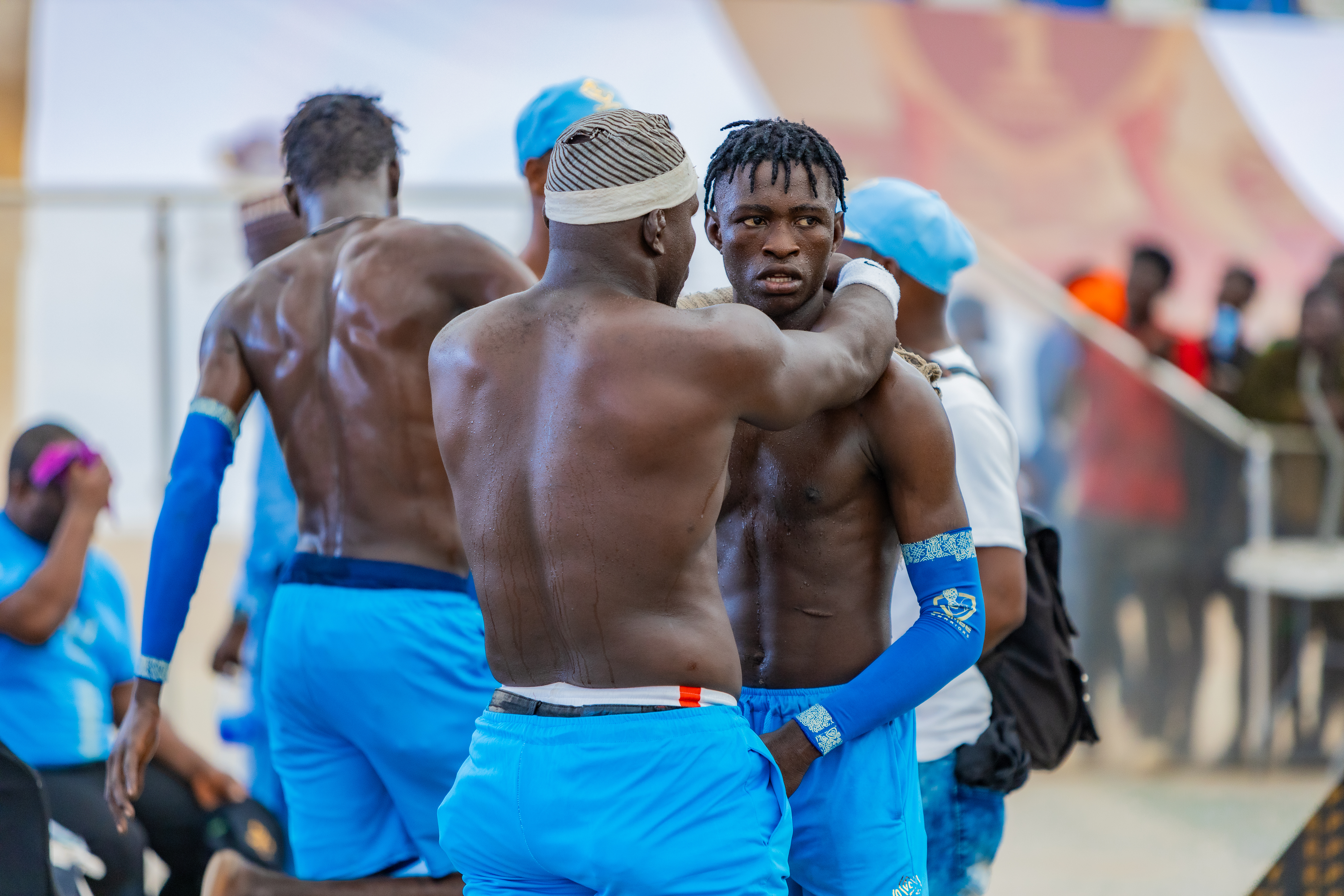
At first glance, Dambe appears purely competitive. Look closer, and you’ll find one of the strongest senses of brotherhood in combat sports.
First, shared hardship creates bonds. Fighters train under intense conditions, pushing physical and mental limits. That mutual struggle fosters respect—even between opponents.
Second, fight houses often train together across regions. Warriors learn from one another, exchange techniques, and grow collectively. Competition doesn’t erase camaraderie; it strengthens it.
Third, cultural rituals unite fighters. Music, drumming, and ceremony aren’t just for fans—they remind fighters they’re part of something bigger than a single bout.
Fourth, post-fight respect is deeply ingrained. Win or lose, fighters often acknowledge each other’s courage. Public recognition of effort reinforces unity.
Finally, mentorship bridges generations. Veteran fighters guide newcomers, sharing wisdom earned through experience. These relationships turn competition into continuity.
In Dambe, brotherhood isn’t accidental—it’s built intentionally through shared values, discipline, and respect for the sport’s roots.